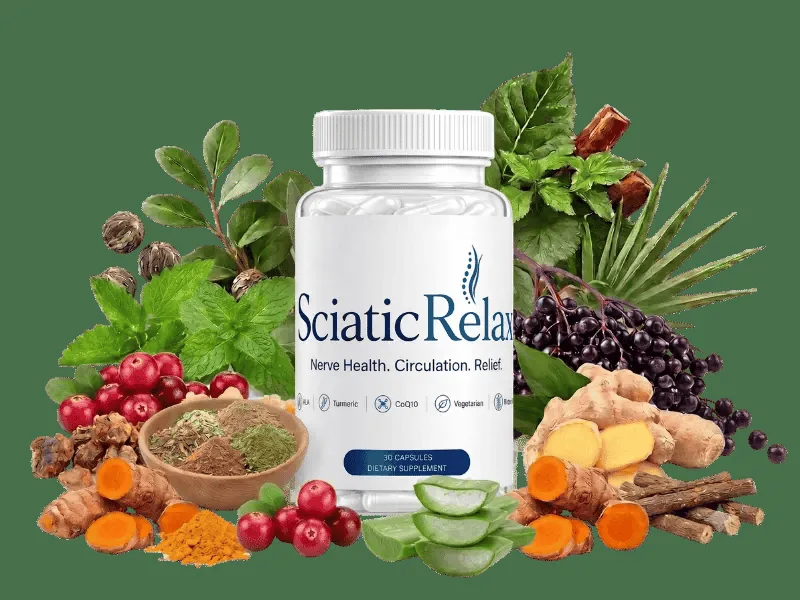
If you've ever dealt with discomfort that travels from your lower back into your hip, buttock, or leg, you already know how disruptive it can be. Sitting through a workday, getting out of bed, or simply finding a comfortable position can suddenly feel complicated. That's the everyday reality behind sciatic discomfort, and it's why so many people start looking for daily nutritional support alongside whatever care their healthcare provider recommends.
SciaticRelax® was built around that everyday reality. It's a dietary supplement, not a medical treatment — and it's important to be upfront about that distinction before going any further.
What "nerve support" actually means
The nervous system depends on healthy cellular function to work the way it should. Antioxidants help protect cells from oxidative stress created during normal metabolic processes, and several nutrients play supporting roles in how muscles and nerves communicate. When people talk about "nerve support" in a supplement context, they're usually referring to nutritional ingredients that support these normal processes — not a mechanism that repairs or regenerates nerve tissue.
That distinction matters. No dietary supplement, including SciaticRelax®, is intended to diagnose, treat, cure, or prevent sciatica or any other medical condition. What a well-formulated supplement can do is provide consistent nutritional building blocks that support the body's own normal functions.
The six ingredients behind the formula
SciaticRelax® combines six named ingredients rather than a single compound or a hidden proprietary blend: Alpha Lipoic Acid, Turmeric Extract, Coenzyme Q10, Magnesium Glycinate, L-Carnitine, and Butcher's Broom Root Extract. Each one is included for a different reason — antioxidant protection, normal inflammatory balance, cellular energy, muscle and nervous system function, and healthy circulation.
We go much deeper on the antioxidant side of that formula in our article on Alpha Lipoic Acid and nerve health, including what the research does and doesn't say about this particular nutrient.
Why magnesium keeps coming up
Muscle tension can make sciatic-type discomfort feel worse, which is part of why magnesium is such a common ingredient in nerve and muscle wellness formulas. Magnesium contributes to normal muscle function and normal nervous system function, and getting enough of it — through diet or supplementation — is a reasonable part of an overall wellness routine. We cover this in more detail in our piece on Magnesium Glycinate and nervous system wellness.
What SciaticRelax® is not
It's worth repeating clearly: SciaticRelax® is not a pharmaceutical treatment, and it won't diagnose the cause of your symptoms. Sciatic-type pain can come from a number of different sources, and a supplement can't distinguish between them. If you're dealing with persistent, severe, or unexplained pain, numbness, or weakness, that's a conversation for a qualified healthcare professional, not a bottle on a shelf.
Building a realistic daily routine
Consistency tends to matter more than intensity with any nutritional supplement. The product directions call for one capsule daily with food and a full glass of water. Pairing that with regular movement, reasonable sitting breaks, and attention to sleep and hydration is a more realistic picture of "support" than any single product can offer on its own.
For a complete look at how the formula holds up, including pros, considerations, and safety notes, see our SciaticRelax® reviews page. And if you want to browse everything we've published on the topic, the SciaticRelax® Wellness Blog is the place to start.